Showing posts with label Regulation. Show all posts

Saturday, June 5, 2010

Climate Bill Is a Misnomer

It’s really a Nuclear Energy-Promoting, Oil Drilling-Championing, Coal Mining-Boosting Gift to Polluters

Via Public Citizen

Statement of Tyson Slocum, Director of Public Citizen’s Energy Program

After half a year of delay, Sens. John Kerry (D-Mass.) and Joe Lieberman (I-Conn.) are set to release their nuclear energy/cap-and-trade bill today. Until we see legislative text, we can comment only on the broad outline made available yesterday and an additional summary being circulated among legislative staff.

It’s not accurate to call this a climate bill. This is nuclear energy-promoting, oil drilling-championing, coal mining-boosting legislation with a weak carbon-pricing mechanism thrown in. What’s worse, it guts the Environmental Protection Agency’s (EPA) current authority to regulate greenhouse gases as pollutants under the Clean Air Act.

Here’s our take on what we know is in the new bill:

Nuclear Power Incentives

At its core, this legislation is all about promoting nuclear power and handing taxpayers the bill. Consider:

- Sections 1101 and 1105 would prioritize the needs of nuclear power corporations over the rights of citizens to have full, public hearings about the risks and dangers of locating nuclear power plants in their communities.

- Section 1102 increases loan guarantees primarily for nuclear power to a jaw-dropping $54 billion. These loans are a terrible deal for the taxpayer, especially considering the high risk of default that even the government acknowledges.

- Section 1103 provides $6 billion in taxpayer-subsidized risk insurance for 12 new nuclear reactors.

- Section 1121 allows nuclear power plant owners to write off their depreciation much faster. Section 1121 provides a 10 percent investment tax credit for new reactors.

- Section 1123 extends the Advanced Energy Project credit to nuclear reactors.

- Section 1124-6 allows municipal power agencies to derive certain tax, bond and grant benefits from investing in nuclear power.

Oil
Apparently oblivious to the ongoing disaster in the Gulf of Mexico, the legislation expands offshore drilling. In fact, all new offshore drilling, leasing and permitting should be halted.

Section 1202 allows states to keep 37.5 percent of oil and gas royalty money. That’s like saying because more rich people live in California and New York compared to Mississippi and New Mexico, those higher-income states should be able to keep more federal dollars raised from income taxes. Royalty revenue sharing is patently unfair – especially because the disaster in Gulf shows that an oil spill does not respect state boundaries.

Coal
Section 1412 establishes a carbon tax paid by ratepayers and collected by utilities to fund carbon capture and storage (CCS) – with no money allocated to rooftop solar or energy efficiency investments. Section 1431 will provide valuable emissions allowances for free to coal utilities pursuing CCS – an untested, risky strategy that benefits the coal industry and is gobbling up a lion’s share of subsidies that otherwise could go to renewable energy development.

Merchant coal power plants (whose rates are not regulated) will get roughly 5 percent of the free allowances, which will provide opportunities for them to gouge consumers.

And while the nuclear and coal industries will receive a lot of taxpayer money and loan guarantees, Section 1604 states that “voluntary” renewable energy markets are “efficient and effective programs” and states that “the policy of the United States is to continue to support the growth of these markets.” This is backward: Renewable energy should be getting the guarantees, rather than the coal and nuclear industries.

Offsets
The legislation allows entities to “reduce” their domestic greenhouse gas emissions by purchasing offsets from projects located in the U.S. and around the world. The recent offset crisis in Europe, where the offset market collapsed due to fraud, underscores the lack of accountability and transparency with offsets.

Consumer Protections
Rather than follow President Barack Obama’s cap-and-dividend plan, which would have required polluters to pay and would have distributed 80 percent of the money directly to families through the Making Work Pay tax credit, or the Cantwell-Collins CLEAR Act, which calls for distributing monthly checks to households, the Kerry-Lieberman approach relies on distributing valuable free allowances to utilities from 2013-2029, then requiring that utilities use the money “exclusively for the benefit of the ratepayers.” But Congress won’t be defining “benefit”; rather, 50 different state utility commissions will. Some will do a great job, but most will allow utilities to structure expensive energy efficiency programs that benefit shareholders more than ratepayers.

Wall Street
It appears that Wall Street may not have gotten everything it wanted – yet. The legislation appears to incorporate elements of S.1399, sponsored by Sen. Dianne Feinstein (D-Calif.), which creates an Office of Carbon Market Oversight at the Commodities Futures Trading Commission (CFTC), giving the agency authority to regulate spot and futures emission markets. It requires all entities seeking to trade emissions derivatives to register and be approved by the CFTC, and all transactions must be cleared through a CFTC-regulated Carbon Clearing Organization. This is a good start to ensure that Wall Street plays no role in gambling on climate policy.

Danger remains, however, in creating carbon trading markets open to non-energy producers. Strong regulations in place today may be easily subverted tomorrow, leaving Wall Street positioned to control our climate future.


Conclusion
The Kerry-Lieberman bill represents a missed opportunity. By meeting behind closed doors, the lawmakers empowered corporate polluters to play an oversized role in influencing the legislation to the detriment of the climate and consumers. President Obama had it right when he successfully campaigned on a theme of making polluters pay and delivering benefits directly to households.

We need a bill that does not incentivize failed and dangerous technologies like nuclear power and does not enrich utilities at the expense of consumers.

Public Citizen is a national, nonprofit consumer advocacy organization based in Washington, D.C. For more information, please visit www.citizen.org.

As citizens and consumers we need to let out legislators know that we need tighter regulation to protect our environment and absolutely no handouts to the oil, gas, coal, nuclear energy or money industries. Let them work for their money as they demand all of us to work for ours.

Monday, May 31, 2010

The False Security of Bottled Water


Did you ever wonder about the quality of your plastic bottled water?
"Scientists at Montreal's C-crest Laboratories found that certain popular brands (which they refused to name) had "surprisingly high" counts of heterotrophic bacteria.

If the trace pharmaceuticals and the spectre of a near-indestructible gyre of swirling plastic the size of Texas weren't enough to scare you off bottled water, then try this: Canadian researchers have discovered that some bottled brands contain more bacteria than water that comes out of the tap.

Scientists at Montreal's C-crest Laboratories found that certain popular brands (which they refused to name) had "surprisingly high" counts of heterotrophic bacteria (meaning they need an organic source of carbon to flourish).

Even though they didn't find any serious pathogens, more than 70 percent of the well-known brands actually failed the standards for heterotrophic bacteria set by the NGO United States Pharmacopeia. According to them, bacteria per millilitre in drinking water should not exceed 500 colony forming units (cfu) - and compared to the sampled tap water average of 170 cfu per millilitre, some of the brands tested had a whopping 70,000 cfu per millilitre.

"Heterotrophic bacteria counts in some of the bottles were found to be in revolting figures of (100) times more than the permitted limit," said Sonish Azam, a researcher on the study, in a news release.

So while these findings would not pose a serious threat to healthy adults - pregnant women, young children and the elderly would need to watch out.

From the Montreal Gazette:

According to Azam, Health Canada hasn't set an allowable limit for heterotrophic bacteria in bottled water, and neither has the U.S. Food and Drug Administration.

[..] Health Canada points out that bottled water is already regulated under the Food and Drugs Act and Regulations.

"Under these regulations, bottled water is required to be free of disease-causing organisms. Like most foods, bottled water may contain naturally occurring bacteria which typically have little or no health significance," it said in a statement.

Stricter safety regulations needed.

The researchers emphasize that the point was not to single out any brand, but to bring about stricter safety regulations on bottled water sold in Canada.

"Bottled water is not expected to be free from micro-organisms but the (colony forming unit count) observed in this study is surprisingly very high," Azam explained. "Therefore, it is strongly recommended to establish a limit for the heterotrophic bacteria count as well as to identify the nature of micro-organisms present in the bottled water."

Let's hope that happens soon. In the meantime, it's yet another reason to eschew the bottle and find some alternatives.

According to Planet Green, "the bottled water industry is a wasteful beast. So good luck ditching the bottle, and may the faucet be with you."

Sunday, May 9, 2010

What's In the Beef?


There is new evidence of contamination in American beef. Not only is E. coli and salmonella found in meat products. But slipping through a system of minimal regulation are practices which allow meat to be contaminated by heavy metals, veterinary drugs and agricultural pesticides.

Slipping Through the Bureaucratic Cracks.

In 2008, Mexican authorities rejected a shipment of U.S. beef because the meat exceeded Mexico's regulatory tolerance for copper. The rejected meat was returned to the United States, where it was sold and consumed, because the U.S. has no regulatory threshold for copper in meat.

Incidents like this are why the food safety arm of USDA, known as the Food Safety and Inspection Service (FSIS), is under USDA scrutiny. While the public has gotten used to microbes like E. coli and salmonella threatening the nation's meat supply, and while food safety agencies make food-borne illness a high-profile priority, contamination of meat by heavy metals, veterinary drugs and pesticides has been slipping through the bureaucratic cracks.

Microbial contaminants can be killed by cooking, but chemical residues aren't destroyed by heat. In fact, some of these residues break down into more dangerous substances when heated, according to the FSIS National Residue Program for Cattle, a recent report by the USDA's Office of the Inspector General.

The report is full of bad news about the ineffectual attempts that are being made to keep chemical residues out of the food supply, but optimists might point to the report's tone as a sliver of good news. The report is sharply critical of the efforts to keep our meat free of chemical residues, and shows determination to shore up this gaping hole in food safety.

"... The national residue program is not accomplishing its mission of monitoring the food supply for harmful residues," the report says, noting that thresholds for many dangerous substances, like copper and dioxin, have yet to be established. "We also found that FSIS does not recall meat adulterated with harmful residues, even when it is aware that the meat has failed its laboratory tests."

The Sickness in the System

The routes by which veterinary drugs make it into human food trace a disturbing portrait of how large dairy farms operate. Sick dairy cows are given medications to help them recover, but if it appears an animal will die, it's often sold to a slaughterhouse as quickly as possible, in time to kill it before it dies. That way, "[the dairy farmer] can recoup some of his investment in the animal," according to the report.

In such cases, medications may be consumed along with the meat. Such drugs include Ivermectin (which can act as a neurotoxin in humans), Flunixin (which can damage kidneys), and penicillin (which can cause life-threatening allergic reactions in some people).

The meat from sick dairy cattle is low-grade, and is usually turned into burger and sold to the sorts of buyers who stretch their dollars furthest, like fast food chains and school lunch programs. But veterinary drugs are also finding their way into an upper echelon of meat: veal.

The milk produced by medicated dairy cows is barred from sale to human consumers -- a sensible rule, given the dangers suggested above. Unfortunately, no law prevents this "waste milk" from being fed to veal calves, the meat of which sometimes tests positive for these drugs. As with sick dairy cow meat that tests positive for antibiotics, no measures are taken to recall such veal or penalize the slaughterhouses that produce it. One slaughterhouse, according to the report, amassed 211 violations in 2008 and was still considered by FSIS as a place where contamination "is not reasonably likely to occur."

Such failings can be traced to a 1984 memorandum of understanding between FDA, FSIS and EPA. These three agencies agreed to appoint senior executives to oversee a group called the Surveillance Advisory Team (SAT). The SAT was supposed to manage interagency collaboration aimed at preventing the entry of chemical residues into the food supply. But according to the recent report, "...high-level officials from the agencies involved do not attend [the annual SAT] meetings, and there is no mechanism for elevating issues, making recommendations, and ensuring that appropriate actions are taken to solve identified problems. Without such a mechanism, many problems requiring interagency coordination have not been dealt with despite the agencies' awareness of the problems."

Chinks in the Food Supply's Armor

In addition to veterinary drugs and heavy metals, agricultural pesticides also find their way into the meat supply, often through contaminated food and water. While the SAT agencies jointly determine which pesticides should be tested for, it's the FSIS that actually conducts the tests. In recent years the FSIS has tested for only one of the 23 pesticide classes it is charged with testing for: chlorinated hydrocarbons/chlorinated organophosphates. FSIS blames its limited budget and a lack of guidance as to minimum levels the agency is supposed to enforce. The Office of the Inspector General report dismisses the excuses and calls the oversight unacceptable, saying "the SAT needs to seek executive-level involvement from all three agencies to resolve differences, and, if necessary, to determine the best method for obtaining the needed testing resources to ensure that the highest priority substances are tested."

Several other chinks in the food supply's armor are noted as well, including faulty testing methodologies, bureaucratic smothering of innovative testing techniques, and failure of FSIS to share testing results. After raking the muck, the report makes recommendations on how the interagency collaborations behind the SAT could be improved. The report also mentions that the FSIS has agreed to many of its recommendations, such as increasing testing at plants that slaughter veal calves and dairy cows--where 90 percent of the residue violations have been detected.

While the Office of the Inspector General appears to be making a sincere effort to improve the framework that's supposed to protect our food, it could also be argued that these efforts amount to enabling an industry that remains rotten at its core. Rushing sick cattle to slaughter before they die, or feeding tainted "waste milk" to veal calves, are practices that would be better eliminated than improved, but in fairness that isn't within the mandate of the OIG to decide. So while improvements appear to be in the works for the production practices behind mystery meat and mystery milk, the system shows little sign of becoming inherently less disgusting. As long as customers keep demanding cheap meat, cheap meat will probably continue to be produced.

This is just another example of business placing profits over safety. Tighter regulation should lead to a safer environment and healthier food.

Friday, April 23, 2010

No to Socialsm, Yes to Corporatocracy!


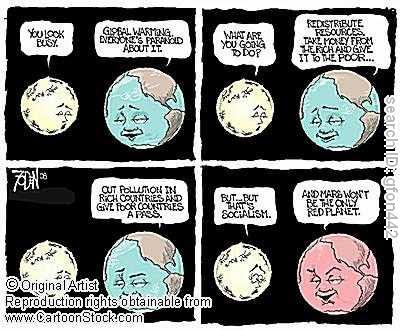
The Tea Bag Movement, the Republican Party and the right-wing pundits are all claiming that Obama and the Democrats are socialists. Let's call these groups the 'anti-socialists.' They believe that Obama wants government ownership of everything. They claim that people should be able to control their own destinies, their own economic choices and their own health care. They are against government regulation and against social assistance. But, what history has shown is that without sufficient regulation, society becomes very unbalanced.

For example, in the 19th century the Robber Barons took advantage of an unregulated banking and commercial system. They amassed enormous personal wealth. In response to the Great Depression of 1929, Congress enacted banking regulations in 1933 known as the Glass–Steagall Act which introduced banking reforms. It wasn't until 1999, that certain provisions that prohibited a bank holding company from owning other financial companies were repealed by the Gramm–Leach–Bliley Act.

It was the Glass-Steagall Act that prohibited any one institution from consolidating an
investment bank, a commercial bank, and an insurance company into one entity. The Gramm-Leach-Bliley Act then allowed commercial banks, investment banks, securities firms, and insurance companies to consolidate. A bi-partisan congress passed the Gramm–Leach–Bliley Act and President Clinton signed it into law.

Recently, President Bill Clinton said that even before the repeal of Glass-Steagall the principles of the legislation had been breached. "Clinton said he regretted not trying to regulate derivatives."
“On derivatives, yeah I think they were wrong and I think I was wrong to take [their advice] because the argument on derivatives was that these things are expensive and sophisticated and only a handful of investors will buy them and they don’t need any extra protection, and any extra transparency. The money they’re putting up guarantees them transparency.” [...]

Clinton said he regretted not trying to regulate derivatives, but that Republicans would have stood in the way. “Now, I think if I had tried to regulate them because the Republicans were the majority in the Congress, they would have stopped it. But I wish I should have been caught trying. I mean, that was a mistake I made.”

That brings us to today.

During a recent interview on Bill Moyers Journal with economists James Kwak and Simon Johnson, Bill Moyers discussed with his guests the devastating financial crisis of '08. The discussion focused on "whether the financial powers are more profitable, and more resistant to regulation than ever."
Bill Moyers: Let me get to the blunt conclusion you reach in your book. You say that two years after the devastating financial crisis of '08 our country is still at the mercy of an oligarchy that is bigger, more profitable, and more resistant to regulation than ever. Correct?

Simon Johnson: Absolutely correct, Bill. The big banks became stronger as a result of the bailout. That may seem extraordinary, but it's really true. They're turning that increased economic clout into more political power. And they're using that political power to go out and take the same sort of risks that got us into disaster in September 2008.

Bill Moyers: And your definition of oligarchy is?

Simon Johnson: Oligarchy is just- it's a very simple, straightforward idea from Aristotle. It's political power based on economic power. And it's the rise of the banks in economic terms, which we document at length, that it'd turn into political power. And they then feed that back into more deregulation, more opportunities to go out and take reckless risks and-- and capture huge amounts of money.

Bill Moyers: And you say that these this oligarchy consists of six megabanks. What are the six banks?

James Kwak: They are Goldman Sachs, Morgan Stanley, JPMorgan Chase, Citigroup, Bank of America, and Wells Fargo.

Bill Moyers: And you write that they control 60 percent of our gross national product?

James Kwak: They have assets equivalent to 60 percent of our gross national product. And to put this in perspective, in the mid-1990s, these six banks or their predecessors, since there have been a lot of mergers, had less than 20 percent. Their assets were less than 20 percent of the gross national product.

Bill Moyers: And what's the threat from an oligarchy of this size and scale?

Simon Johnson: They can distort the system, Bill. They can change the rules of the game to favor themselves. And unfortunately, the way it works in modern finance is when the rules favor you, you go out and you take a lot of risk. And you blow up from time to time, because it's not your problem. When it blows up, it's the taxpayer and it's the government that has to sort it out.

Bill Moyers: So, you're not kidding when you say it's an oligarchy?

James Kwak: Exactly. I think that in particular, we can see how the oligarchy has actually become more powerful in the last since the financial crisis. If we look at the way they've behaved in Washington. For example, they've been spending more than $1 million per day lobbying Congress and fighting financial reform. I think that's for some time, the financial sector got its way in Washington through the power of ideology, through the power of persuasion. And in the last year and a half, we've seen the gloves come off. They are fighting as hard as they can to stop reform.

Simon Johnson: I know people react a little negatively when you use this term for the United States. But it means political power derived from economic power. That's what we're looking at here. It's disproportionate, it's unfair, it is very unproductive, by the way. Undermines business in this society. And it's an oligarchy like we see in other countries.
Today, six banks control 60% of the Gross National Product (GNP) which according to Simon Johnson and James Kwak is considered an oligarchy.

This brings us back to the 'anti-socialists.' They are extremely fearful. They rant and rave that President Obama wants the federal government to own all means of production. Although they accept their medicare payments and social security checks, they have railed against the recent health care legislation even though it is an insurance company for-profit health care plan.

What is the anti-socialist position on the issue of economics and banking regulation? Are the anti-socialists content with an oligarchy of our banking industry? Are they ranting and raving, yelling and screaming, demonstrating against the corporate oligarchy (corporatocracy) of banking? Are they outraged that only 6 banks own 60% of GNP?

Sarah Palin:
Palin apparently thinks that the solution to our economic mess in the United States is less government regulation rather than more to rein the bankers and Wall Street in for their bad behavior.
Tea Party:
This movement is against stronger regulation. As Republicans softened their stance against the financial regulation bill, tea partyers reacted by lashing out against the GOP.

GOP Conservatives:
For conservatives the best bank regulation is no regulation. Conservatives, of course, think we need less regulation, not more.
Judging from the rallies on Wall Street yesterday, the capitalists haven't bought into the GOP talking points about socialism quite to the extent of the Glenn Beck/Rush Limbaugh crowd of modern day Know Nothings. But if you think the conservatives dig in on healthcare reform, just watch them on financial reform-- the real line in the sand for the representatives of institutionalized Greed and Selfishness.

After foot (and knuckle) dragging all year, the GOP was left out of the final legislation entirely-- although far, far too many of their reactionary demands were met as Dodd and the Democrats compromised with good sense for no reason, unless currying favor with the banksters is considered reasonable in Inside the Beltway Democratic circles. Yesterday the Senate Banking Committee approved Dodd's financial overhaul legislation 13-10, without a single Republican vote.

The 10 crooked, bribe-taking handmaidens of the Wall Street banks who have vowed to throw themselves under the bus of progress are Richard Shelby (R-AL- $5,213,130), Robert Bennett (R-UT- $2,354,767), Jim Bunning (R-KY- $2,580,305), Mike Crapo (R-ID- $1,728,513), Bob Corker (R-TN- $3,058,330), Jim DeMint (R-SC- $2,463,860), David Diapers Vitter (R-LA- $2,083,149), Mike Johanns (R-NE- $687,621), Kay Bailey Hutchison (R-TX- $4,702,438) and Judd Gregg (R-NH- $1,077,149).

Dodd says his bill will end taxpayer-funded bailouts of companies supposedly "too big to fail," regulate-- for the first time-- the multitrillion-dollar derivatives market, and bring long-overdue consumer protection to financial products. The Republicans have watered down the most important aspects of real reform and are expected to filibuster the eventual bill, no matter how weak and crappy the Democrats make it to please them. Sound familiar?
WATCH Fox News explain the Republican position.


Are you confused yet? Totally. The Fox News guy says that there are already enough laws on the books to handle every economic situation. Both he and Professor Bill Black seem to be blaming the economic situation on both Obama, Geithner and the Democrats. But on April 3, 2009, Bill Black was interviewed by Bill Moyers. Here is what he had to say.
Click HERE to watch the program.
BILL MOYERS: If I wanted to go looking for the parties to this, with a good bird dog, where would you send me? WILLIAM K. BLACK: Well, that's exactly what hasn't happened. We haven't looked, all right? The Bush Administration essentially got rid of regulation, so if nobody was looking, you were able to do this with impunity and that's exactly what happened. Where would you look? You'd look at the specialty lenders. The lenders that did almost all of their work in the sub-prime and what's called Alt-A, liars' loans.
The anti-socialists want small government, individual liberty, and free markets. They don't want any banking regulation. They don't want government control. Yet, what we now have is a corporate oligarchy which controls our economic system and inhibits individual freedoms and free markets.

The right-wing motto has now become: No to Socialism, Yes to
Corporatocracy!

Monday, May 4, 2009

What Should Be Regulated?


Republicans and the right-wing media are framing Barack Obama as being a "socialist." They complain that there is too much government regulation. They want government to get out of our lives and not control what we do. Unless of course they are refering to what we do in our bedrooms.

Daily Kos has an interesting article,
How Freedom Was Lost, about the need for government regulation because unregulated business does not self regulate.
In recent days there seems to be a trend, especially among those nodding along to Fox News, to look on every government worker as a leach on society. Is there any term said with more innate disdain than government bureaucrat? When George W. Bush first ran for congress, he campaigned for the elimination of two government agencies -- OSHA and the EPA. It's a position that would draw many cheers from those pulling for Rick Perry's rebellion today.

If there is one critical difference between the conservative and progressive view of the nation it is this: Conservatives believe that America became a vibrant, wealthy nation in spite of the government's burden on business. Progressives believe that the United States prospered because of a national effort to reign in the worst of corporate excess.

Over a century, we became a country with safety rules, with environmental regulations, with protection for the elderly. Over that same century our economy and individual wealth outstripped both our historical bests and the record of the rest of the world. Progressives see that as victory. Conservatives call it coincidence.

It's tempting to run the experiment of giving conservatives what they want. A nation without environmental rules, without workplace safety rules, without any social safety nets. Free them from the reign of bureaucrats and petty regulations. Let them live in that place where the medicine you give your baby to ease her teething pains can be made with antifreeze. Let them work in a mine where there is no regulation and thousands die each year. Let them wonder if their next bite of food will put them among the 1.8 million who die horribly each year from severe food-borne cases of diarrhea. Let them drive a car that will fall apart in the slightest collision. Let them breath free air, untainted by government interference -- air you can really sink your teeth into.

Fortunately, we don't have to run that experiment -- because we already did it. That's how we got where we are today. All those areas of our lives became regulated, because left unregulated people overreached to unsafe, and frequently hideous degrees. There would be no Clean Air Act if companies had controlled pollution on their own. There'd be no need to regulate banks, had they not demonstrate time and again that without supervisions they'll chase short term profit into a pit -- and drag the rest of us after them.


America isn't the only example of this experiment. This is an study that's been made hundreds of time in hundreds of nations, and the absolute freedom of the marketplace always runs counter to the good of ordinary citizens. Always. Those places in the world with the fewest restrictions on business are not the places anyone would really want to live. They're not even good places to do business if your task is more complex than ripping resources out of the ground and shipping them to some place that's safer. Business and government must reach a compromise if either is to be effective.

Tuesday, April 14, 2009

It's the Money, Stupid!!!

Legalizing marijuana is a hot topic issue. It is now being discussed by the media as well as some lawmakers. There has been a growing consensus that legalizing marijuana makes sense.
In the past few weeks, commentators like David Sirota (The Nation), Kathleen Parker (Washington Post), Paul Jacob (TownHall.com), Clarence Page (Chicago Tribune), and Jack Cafferty (CNN) have all expressed sympathy for regulating pot. Even Joe Klein at Time Magazine weighed in on the issue, writing this month that "legalizing marijuana makes sense."
Here are a few thoughts:

1. Makes Cents

According to a 2005 analysis by Harvard University senior lecturer Jeffrey Miron -- and endorsed by over 500 distinguished economists -- replacing pot prohibition with a system of taxation and regulation similar to that used for alcohol would produce combined savings and tax revenues of between $10 billion and $14 billion per year.

A separate economic analysis, conducted by George Mason University professor Jon Gettman in 2007, estimates that the total amount of tax revenue derived from cannabis could be far higher. According to Gettman, the retail value of the total U.S. marijuana market now stands at a whopping $113 billion per year. Using standard tax percentages obtained from the Office of Management and Budget, he calculates that the diversion of this market from the taxable economy deprives taxpayers of $31.1 billion annually.

2. Taxes & Regulation

Taxing and regulating cannabis would have the added bonus of taking the production and trafficking of pot out of the hands of criminal enterprises and, increasingly, drug gangs. According to the Associated Press, marijuana is the "biggest source of income" for Mexican drug cartels. Legalizing pot would eliminate this primary income source for these cartels and, in turn, eliminate much of the growing violence and turf battles that currently surround the drug's illegal importation from Mexico.
High Times's has 10 top reasons that marijuana should be legal, part of its 420 Campaign legalization strategy.

Thursday, March 26, 2009

The Kings of Deregulation

Did anyone see it coming? The economic crisis that we all face. Remember, one day money was freely flowing and then the next day we were told that the sky was falling.

It seems that Sen. Byron Dorgan (D-N.D.) saw it coming back in 1999. That's when he voted against the Gramm-Leach-Bliley Act, named after Sen Phil Gramm. Back then, not only did Republicans support deregulation but Democrats did too. This bill had the full support of President Clinton, Bob Rubin and Larry Summers.

Let's not forget about the Glass-Steagall Act. It was the Gramm-Leach-Bliley Act that repealed the Glass-Steagall Act and many of the protections put in place after the Great Depression. This was all under the watch of Republican Democratic President Bill Clinton.

Many believe
that the major cause of the current banking meltdown was the 1999 repeal of the Glass-Steagall Act.
The Glass-Steagall Act, passed in 1933, mandated the separation of commercial and investment banking in order to protect depositors from the hazards of risky investment and speculation. It worked fine for fifty years until the banking industry began lobbying for its repeal during the 1980s, the go-go years of Reaganesque market fundamentalism, an outlook embraced wholeheartedly by mainstream Democrats under the rubric "neoliberalism."

This disgraceful bow to the banking industry, eagerly signed into law by Bill Clinton in 1999, bears a major share of responsibility for the current banking crisis.
Sen. Byron Dorgan was recently on The "Rachel Maddow Show" and spoke about those who got deregulation terribly wrong -- and the small handful who saw the disastrous consequences coming a decade ago. Dorgan also spoke of the need for regulation. Watch: