Paul Krugman has an interesting article regarding the Presidential candidate Mitt Romney, job creation and outsourcing. Well, maybe that's offshoring. Or is it just offsourced. He dicsusses all these choices in, Romney Knows Outsourcing Not Creating Jobs.
In a better America, Mitt Romney would be running for president on the strength of his major achievement as governor of Massachusetts: a health reform that was identical in all important respects to the health reform enacted by President Obama. By the way, the Massachusetts reform is working pretty well and has overwhelming popular support.
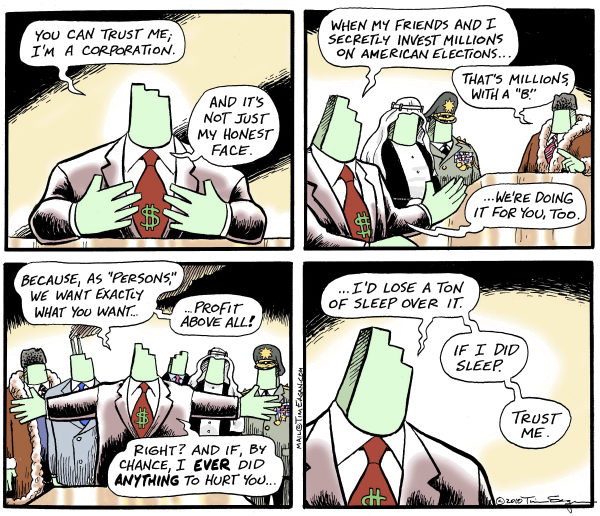
In reality, however, Mr. Romney is doing no such thing, bitterly denouncing the Supreme Court for upholding the constitutionality of his own health care plan. His case for becoming president relies, instead, on his claim that, having been a successful businessman, he knows how to create jobs.This, in turn, means that however much the Romney campaign may wish otherwise, the nature of that business career is fair game. How did Mr. Romney make all that money? Was it in ways suggesting that what was good for Bain Capital, the private equity firm that made him rich, would also be good for America?And the answer is no.The truth is that even if Mr. Romney had been a classic captain of industry, a present-day Andrew Carnegie, his career wouldn’t have prepared him to manage the economy. A country is not a company (despite globalization, America still sells 86 percent of what it makes to itself), and the tools of macroeconomic policy — interest rates, tax rates, spending programs — have no counterparts on a corporate organization chart. Did I mention that Herbert Hoover actually was a great businessman in the classic mold?In any case, however, Mr. Romney wasn’t that kind of businessman. Bain didn’t build businesses; it bought and sold them. Sometimes its takeovers led to new hiring; often they led to layoffs, wage cuts and lost benefits. On some occasions, Bain made a profit even as its takeover target was driven out of business. None of this sounds like the kind of record that should reassure American workers looking for an economic savior.And then there’s the business about outsourcing.Two weeks ago, The Washington Post reported that Bain had invested in companies whose specialty was helping other companies move jobs overseas. The Romney campaign went ballistic, demanding — unsuccessfully — that The Post retract the report on the basis of an unconvincing “fact sheet” consisting largely of executive testimonials.What was more interesting was the campaign’s insistence that The Post had misled readers by failing to distinguish between “offshoring” — moving jobs abroad — and “outsourcing,” which simply means having an external contractor perform services that could have been performed in-house.Now, if the Romney campaign really believed in its own alleged free-market principles, it would have defended the right of corporations to do whatever maximizes their profits, even if that means shipping jobs overseas. Instead, however, the campaign effectively conceded that offshoring is bad but insisted that outsourcing is O.K. as long as the contractor is another American firm.That is, however, a very dubious assertion.Consider one of Mr. Romney’s most famous remarks: “Corporations are people, my friend.” When the audience jeered, he elaborated: “Everything corporations earn ultimately goes to people. Where do you think it goes? Whose pockets? Whose pockets? People’s pockets.” This is undoubtedly true, once you take into account the pockets of, say, partners at Bain Capital (who, I hasten to add, are, indeed, people). But one of the main points of outsourcing is to ensure that as little as possible of what corporations earn goes into the pockets of the people who actually work for those corporations.Why, for example, do many large companies now outsource cleaning and security to outside contractors? Surely the answer is, in large part, that outside contractors can hire cheap labor that isn’t represented by the union and can’t participate in the company health and retirement plans. And, sure enough, recent academic research finds that outsourced janitors and guards receive substantially lower wages and worse benefits than their in-house counterparts.Just to be clear, outsourcing is only one source of the huge disconnect between a tiny elite and ordinary American workers, a disconnect that has been growing for more than 30 years. And Bain, in turn, was only one player in the growth of outsourcing. So Mitt Romney didn’t personally, single-handedly, destroy the middle-class society we used to have. He was, however, an enthusiastic and very well remunerated participant in the process of destruction; if Bain got involved with your company, one way or another, the odds were pretty good that even if your job survived you ended up with lower pay and diminished benefits.
In short, what was good for Bain Capital definitely wasn’t good for America. And, as I said at the beginning, the Obama campaign has every right to point that out.
Mitt Romney has created more jobs elsewhere while terminating jobs here. Why should we believe that he now has the requisite experience regarding unemployment in the U.S. and creating jobs?